Myanmar stands at a pivotal juncture in mid‑2025. Four years after the February 2021 military coup, the nation remains mired in political turmoil, armed conflict, international pressure, and regional spillover. Below, we explore the military government’s positioning, cross‑border insurgencies, humanitarian impacts, India’s escalating security operations, and regional dynamics—all in the context of emerging drone warfare and shifting global alliances.
1. A Military Coup Enshrined: The Junta’s Rise
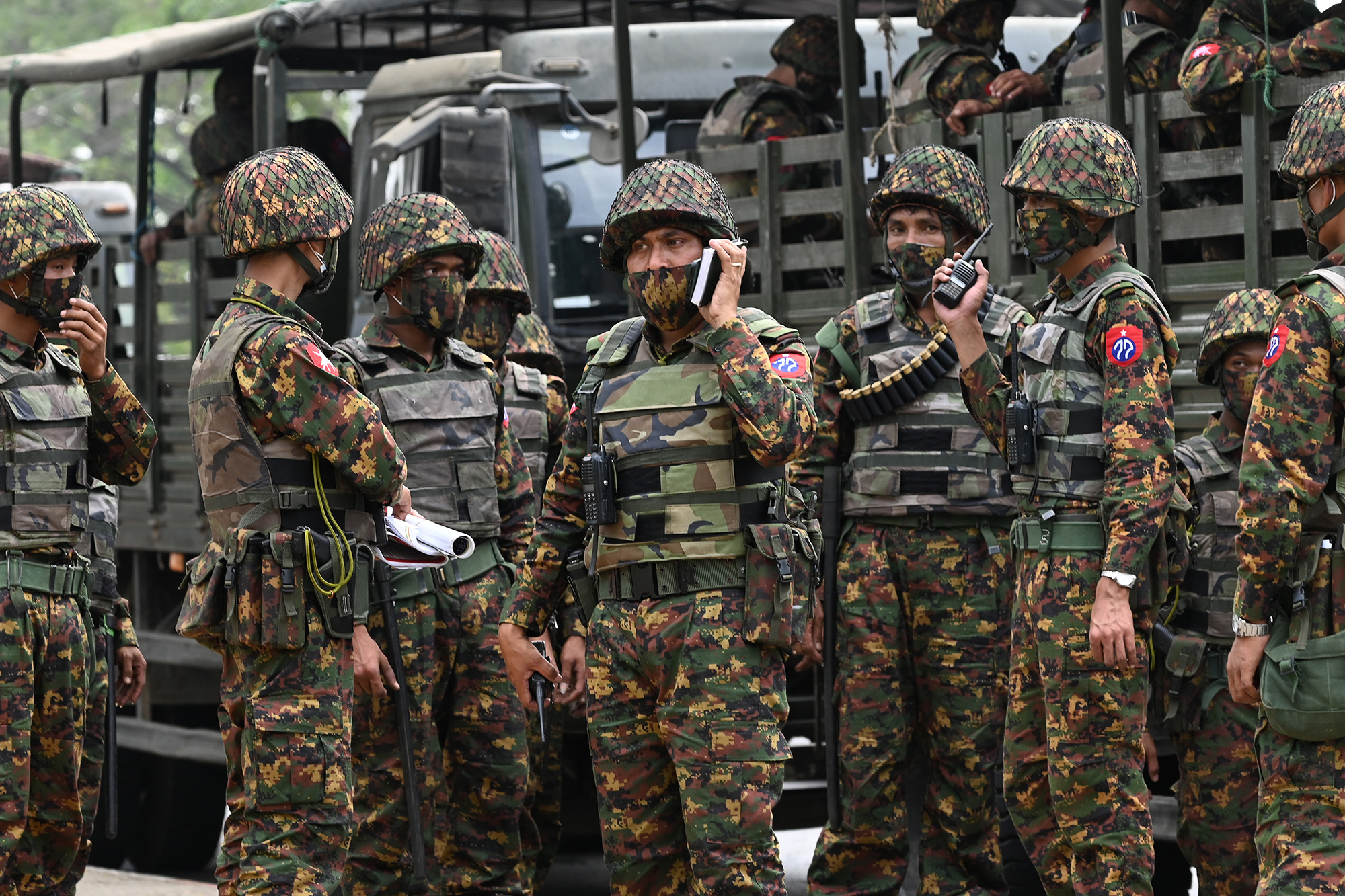
Since the 2021 coup, Myanmar’s military*—the Tatmadaw*—has asserted near‑absolute control over state institutions. On 13 July 2025, the generals convened a major parade in Naypyitaw, showcasing strength and unity. In keeping with this narrative, state media heralded a new 40 % US export tariff (initially announced under former President Donald Trump) as a “diplomatic victory”, portraying Western pressure as international recognition and even engagement. According to government outlets, the notice was framed as an “encouraging invitation” to economic dialogue, illustrating the junta’s adept spin strategy.
Analysis: While true international recognition remains elusive—the junta still lacks U.S. or EU legitimacy—it’s capitalising on trade rhetoric to bolster internal prestige and seed doubt about Western hegemony.
2. Armed Conflict Inside Myanmar
a. Ethnic Armed Clashes: Chin State Crisis
On 5–6 July 2025, 2,500+ civilians from Myanmar’s Chin State fled cross‑border violence into India’s Mizoram (Champhai district). The fighting pitted two Chin rebel factions—the Chinland Defence Force‑Hualngoram (CDF-Hualngoram) and Chin National Defence Force (CNDF)—in clashes that destroyed several camps. The Myanmar military has been conspicuously absent, narrowing the ceasefire’s loopholes. Indian relief efforts and local diplomacy helped stabilize the situation, and refugees began returning home by 12–13 July.
Regional implications: This highlights the longstanding tension between ethnic mobilization and central authority, especially where state enforcement is weak.
b. ULFA(I), NSCN‑K and India’s Drone‑Missile Strikes
Perhaps the most dramatic event came on 13 July, when the Indian‑based insurgency group ULFA(I) claimed that India launched massive drone-and-missile strikes on their camps and allied NSCN-K bases located in Myanmar territory near Nagaland and Arunachal Pradesh. According to ULFA(I), over 100 drones were used between 02:00–04:00, killing up to three senior leaders—notably Lt‑Gen Nayan Medhi—and wounding about 19 others. They specifically named Brigadier Ganesh Asom and Colonel Pradip Asom among victims.
However, Indian military spokespeople categorically denied any operation, stating there were “no inputs” about such actions. Nonetheless, multiple media outlets—including regional experts and intelligence sources—suggest close coordination with Myanmar’s military allowed this unprecedented cross‑border operation.
Strategic context: If true, this implies India has shifted to more assertive counter‑insurgency tactics, possibly including collaboration with the Myanmar junta. It also evolves the battlefield into shared skies—with unmanned aerial systems (UAS) now central to regional insurgent suppression.
3. The Rise of Drone Warfare in the Region
The ULFA(I) events reflect a broader shift in South and Southeast Asian security: drones are no longer exclusive to state actors but now increasingly used in low-intensity, cross-border operations.
- India’s reputed use of ~100 drones to strike multiple camps signals a substantial escalation.
- Alleged use of Israeli and French-built UAVs suggests high-tech procurement and evolving capabilities.
- Myanmar’s military has long leveraged drones in internal operations against civil populations and ethnic insurgents—evident during events like the 2021 coup suppression.
Implication: Myanmar’s airspace is rapidly becoming both a destination for foreign military operations and a testing ground for emerging UAS tactics.
4. China, Russia, and Western Responses
a. China & Russia
Both major powers continue to affirm their support for the Myanmar military government. China, critical for Myanmar’s economic lifelines (trade, Belt & Road Initiative projects), remains the junta’s main patron. Russia supplies key arms, especially air-defense systems and attack helicopters. Beijing and Moscow oppose Western sanctions and UN censure, ensuring Myanmar can weather global scrutiny.
b. Western Policy
The EU, U.S., and UK maintain a policy of targeted sanctions, visa bans, and refusal to re‑recognize the junta. However, humanitarian aid still flows. In recent weeks, additional EU sanctions targeted oil and gas firms linked to the generals. The “tariff cheer” narrative attests to the junta’s ongoing propaganda offsetting Western economic pressure.
5. Humanitarian Emergency & Displacement
a. Civilian Suffering
Human Rights Watch, UN agencies, and other NGOs report over 2 million internally displaced persons (IDPs) across Myanmar. Rampant military campaigns, scorched-earth tactics, and siege warfare on ethnic-minority townships (especially in Chin, Sagaing, and Karen states) continue unabated. Food shortages and disease outbreaks in camps make the risk of famine real.
b. Cross‑border Spillover
The Zokhawthar camp in Mizoram, India, has highlighted the ripple effect of Myanmar’s internal violence. India—traditionally reluctant to admit refugees—allowed temporary shelter for nearly 3,000 displaced individuals. Civic organizations and Mizoram’s veteran peace brokers like the Young Mizo Association played a key humanitarian role.
6. International & Regional Crossroads
a. ASEAN’s Dilemma
Myanmar remains on the Lingua Franca of ASEAN summits under the “ASEAN Five-point Consensus” umbrella: ceasefire; dialogue; envoy access; humanitarian aide; political facilitation. Implementation remains vexed. The junta either delays, partially enforces, or openly resists. Meanwhile, global actors watch regional cooperation fray.
b. Bangladesh & Rohingya
Assurances from Myanmar to repatriate Rohingya refugees are faltering. Talks have again failed, and violence in western Rakhine State complicates any return. Bangladesh insists conditions are not safe or dignified without robust security and citizenship plans.
7. What Lies Ahead?
a. Political Solutions?
The junta continues refusing elections. Civil society and parallel shadow governments (like the National Unity Government/NUG) remain banned and forced into armed resistance. While democratic networks remain active underground, their capacity is weakened by substantive crackdowns.
b. International Engagement
- Sanctions—targeted yet amplified—aim to isolate military firms, oil, and gas generals.
- Whether bilateral diplomacy can push real dialogue remains unclear.
- U.S., EU, Japan, and India are evaluating an “engagement-with-stress” posture: offering humanitarian aid while keeping diplomatic pressure.
c. Military Balance
With increased Myanmar-India military coordination, cross-border insurgencies may face new pressure—but such actions risk inflaming ethnic tensions, triggering cycles of violence, and potentially expanding drone warfare to civilian zones.
Bringing It All Together: Key Takeaways
Military entrenchment: The junta continues to consolidate power, resisting Western diplomatic disengagement, while framing adverse policies as opportunities.
Armed fragmentation: Myanmar’s multi-front internal conflict exacerbates civilian suffering. Ethnic forces and rebel groups—armed, decentralized, emboldened.
Drone escalation: Emerging drone warfare transcends national boundaries, signaling a new frontier in regional security.
Regional spillovers: Border states like India’s Mizoram face humanitarian inflows; India itself considers direct military engagement with Myanmar‑hosted insurgents.
Global alignment drama: China and Russia act as backbones for the junta, Western powers maintain a sanctions regime, ASEAN remains diplomatically impotent, and Bangladesh balks at Rohingya returns—competing interests lock Myanmar into a diplomatic tug‑of‑war.
What’s next? Keeping Myanmar’s trajectory from sliding further into humanitarian collapse requires cohesive pressure:
- Combine sanctions with incentives for ceasefire and inclusive dialogue.
- Secure humanitarian corridors without empowering the military.
- Monitor and regulate drone proliferation in regional security frameworks.