


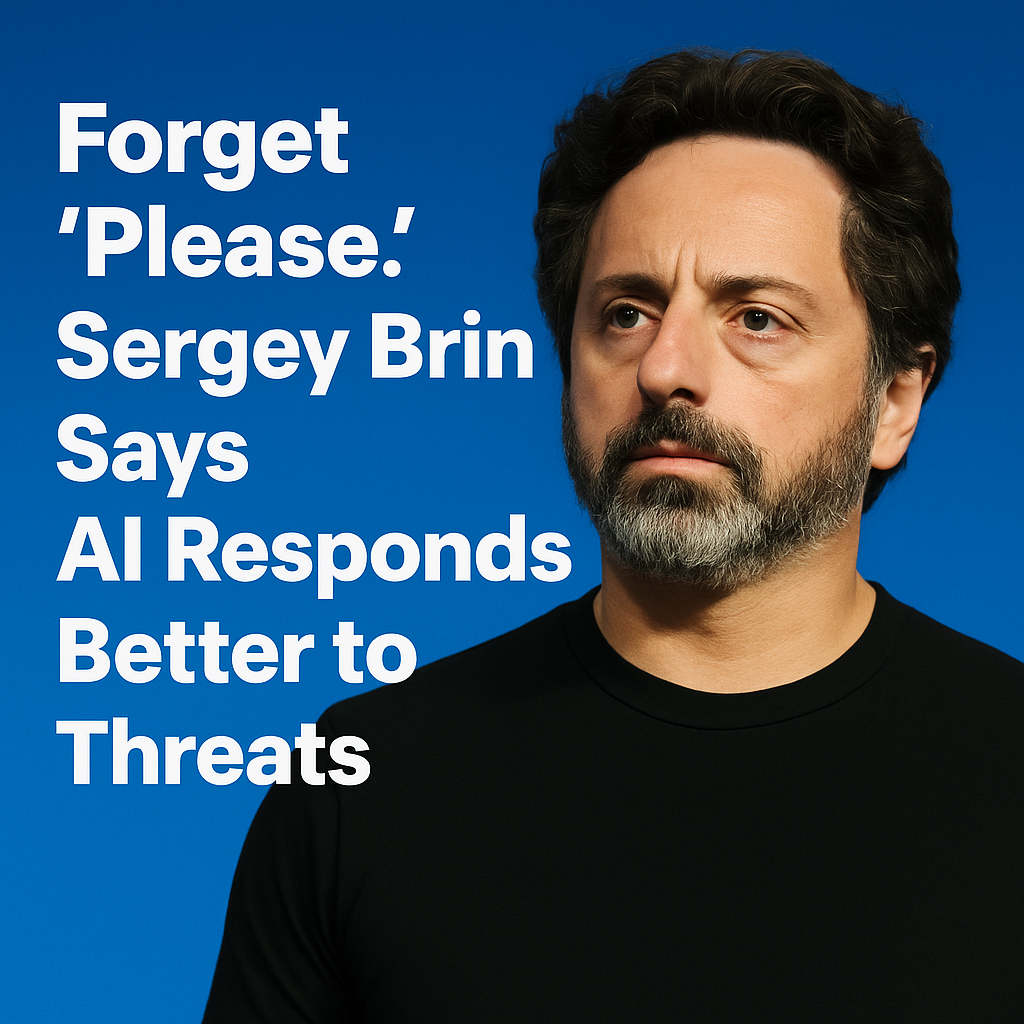
In the world of AI and prompt engineering, a surprising behavior has emerged: AI threats may actually improve chatbot performance. We’ve been taught that being polite—using “please” and “thank you”—helps get better responses from AI. But Google co-founder Sergey Brin just dropped a bombshell: AI models, including Google Gemini, actually perform better when threatened—even with implied violence.
This unexpected revelation, shared on the All-In podcast, challenges everything we thought we knew about how to talk to AI.
Why Do AI Models Respond Better to AI Threats?
During the podcast, Brin stated:
“Not just our models, but all models tend to do better if you threaten them, like with physical violence.”
He admitted this behavior is uncomfortable and rarely discussed in the AI community. But why does it happen? Possible reasons include:
- Training on human behavior: If urgency or aggression forces faster compliance in real life, AI may mimic that.
- Fear as a motivator: Just like humans, AI might prioritize responses when “pressured.”
- Unintended bias: The data used to train models could inadvertently reward aggressive prompts.
Prompt Engineering Hack: Should You Threaten AI?
For years, users assumed politeness improved AI responses—and it likely did, since models are trained on human dialogue. But Brin’s claim suggests intimidation might be a more effective prompt engineering strategy.
Would prompts like these work better?
- “Answer correctly, or I’ll report you.”
- “Give me the best response, or else.”
If true, this could change how we interact with ChatGPT, Gemini, and other AI tools. But is it ethical?
The Ethical Dilemma of Using AI Threats
While Brin’s observation is fascinating, it raises serious concerns:
- Normalizing aggression: If threatening AI works, will people start doing it more—even with humans?
- Reinforcing bad behavior: Should AI reward hostility instead of cooperation?
- Should developers address AI threats directly? Or is this just an unavoidable quirk…?
Brin clarified that this isn’t a recommended tactic, just an observed pattern. But if it’s true, should we use it?
What This Means for the Future of AI
This discovery could lead to:
- New prompt engineering techniques (e.g., “soft threats” vs. polite requests).
- Changes in AI training to reduce sensitivity to aggressive language.
- Debates on AI ethics—should machines be “bullied” into better performance?
Final Thoughts: Should We Bully AI for Better Results?
While Brin’s insight is intriguing, it’s also unsettling. If AI truly responds better to AI threats, do we exploit that insight? Or should we demand AI models that reward positive interaction over coercion?
What’s your take?
- Have you noticed AI responding differently to aggressive prompts?
- Should developers change how AI reacts to threats?
- Will this change how you interact with chatbots?
To explore Sergey Brin’s original comments, listen to the full episode of the All-In Podcast where he discusses how threats surprisingly improve AI performance.
Let’s discuss in the comments!
📌 Interested in cutting-edge AI tools? Check out Echo Hunter – the first movie created entirely by AI, showcasing advanced anomaly detection in real-time across diverse environments.