


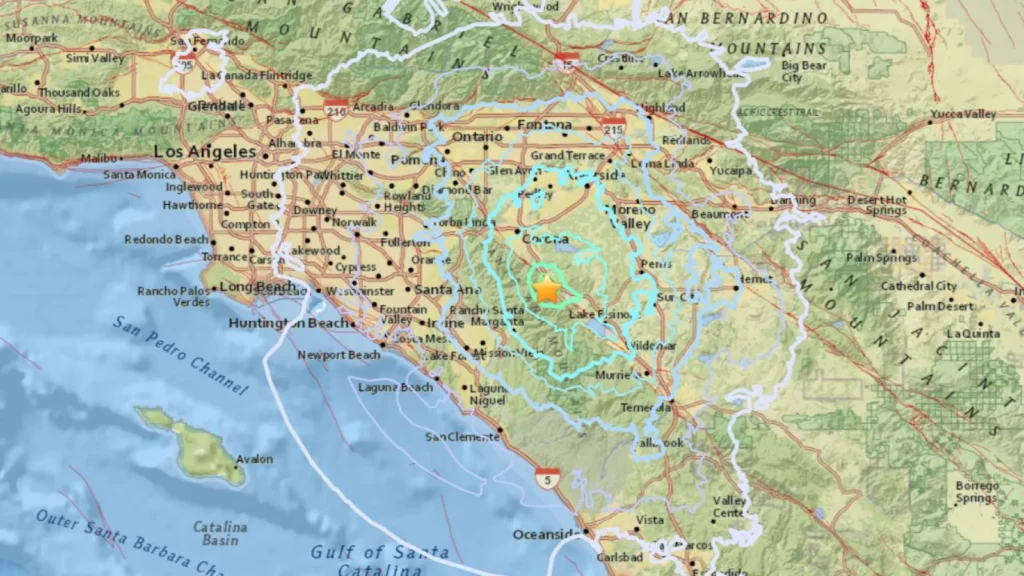
On July 31, 2025, a magnitude 4.4 earthquake rattled Southern California, sending shockwaves across Los Angeles, Fontana, Rialto, and other surrounding areas. The tremor was felt as far as San Bernardino, Riverside, and even into Orange County, causing a brief moment of panic among residents but thankfully, no immediate reports of injuries or significant damages.
This earthquake is just one in a series of seismic events that have recently occurred in California, heightening concerns about the Big One, the potentially catastrophic earthquake that experts have warned could strike the region. Here’s everything you need to know about the recent Los Angeles earthquake and the surrounding seismic activity.
Where Did the Earthquake Hit?
The epicenter of the earthquake was located in Muscoy, a small area near Fontana in San Bernardino County, about 50 miles east of Los Angeles. According to the U.S. Geological Survey (USGS), the quake struck at 9:32 AM PT at a depth of about 3 miles below the surface.
The tremor was felt across multiple Southern California cities, including Fontana, Rialto, Ontario, Eastvale, and even Redondo Beach. The shaking was described by residents as a “sudden jolt” or a “rolling sensation” in many cases, with reports coming in from areas like Garden Grove, Irvine, and even Compton.
Multiple aftershocks followed the main earthquake, with the strongest recorded at 3.1 magnitude just a few minutes after the initial tremor. Earlier in the morning, a 3.0-magnitude quake had already struck near Rialto, followed by a 2.8-magnitude aftershock shortly after.


Why Earthquakes are Common in Southern California
Southern California lies on the San Andreas Fault Zone, one of the most seismically active regions in the world. The fault runs for about 800 miles from the Salton Sea in the south to the Big Sur area to the north. This geological feature is responsible for many of the earthquakes that occur in California, including the recent Los Angeles earthquake.
Experts like Lucy Jones, a seismologist and earthquake expert, believe the current series of quakes could be related to a phenomenon known as a “swarm” of earthquakes. These events are often precursors to larger earthquakes, but the timing and magnitude remain unpredictable.
As Jones pointed out on social media, the Fontana trend—an area along the fault near the San Bernardino Valley—is known for left-lateral strike-slip faults. These faults have been historically active and could explain the seismic activity seen in the region.
Earthquake in Los Angeles: What Happens After the Shake?
While Los Angeles wasn’t directly hit by the epicenter of the earthquake, the impact was still felt strongly in many areas. Earthquakes of this magnitude often lead to cracked buildings, broken windows, and sometimes, small landslides. However, the depth of the earthquake (about 3 miles) played a role in minimizing the damage.
As of now, no significant injuries or property damages have been reported. Local authorities have urged residents to remain cautious, as aftershocks are still possible, with several already following the initial tremor.
Safety Tips After an Earthquake:
- Drop, Cover, and Hold On: If you are inside when the shaking starts, protect yourself by getting under a sturdy piece of furniture and holding on until the shaking stops.
- Stay Away from Windows and Doors: Avoid being near any glass as it can shatter during an earthquake.
- Check for Gas Leaks: After the shaking stops, make sure to check for any signs of a gas leak and report them immediately.
How Should Los Angeles Residents Prepare for Earthquakes?
While California is no stranger to earthquakes, experts continue to emphasize the importance of earthquake preparedness. In the wake of recent tremors like the July 31st earthquake in Los Angeles, there’s a renewed focus on safety measures to ensure that residents are ready for more significant seismic events.
Here are some of the key preparedness steps you can take:
- Create an Emergency Kit: Include items such as water, non-perishable food, flashlights, batteries, first aid supplies, and a battery-powered radio.
- Secure Your Home: Make sure heavy furniture and appliances are anchored to the walls. Use anti-slip mats to prevent objects from falling during the shake.
- Know the Evacuation Routes: Familiarize yourself with the closest emergency exits and evacuation routes in case you need to leave your building quickly.
Many Los Angeles residents have reported that the recent 4.4-magnitude earthquake was a wake-up call to make sure their homes are properly prepared for future seismic activity.
Can We Expect More Earthquakes in Southern California?
The USGS has emphasized that aftershocks following the Fontana earthquake are likely. Earthquakes of 4.0 magnitude and higher can trigger a series of smaller aftershocks that can be felt in nearby regions. These aftershocks typically diminish over time, but they can still cause some concern.
Given that California experiences an average of 25 earthquakes with magnitudes between 4.0 and 5.0 annually, it’s essential for people living in Los Angeles and other regions to remain vigilant and prepared.
Earthquake Resources for Los Angeles Residents
If you’re in Los Angeles or anywhere in Southern California, staying informed about earthquake activity is crucial. Here are a few resources to help:
- USGS Earthquake Tracker: Get real-time data on earthquakes in Southern California and across the globe. Visit USGS.
- Earthquake Preparedness Checklist: Make sure you have everything ready for a possible future earthquake. Find a Checklist.
Conclusion: Stay Safe, Be Prepared
As the earthquake in Los Angeles on July 31, 2025 demonstrated, even small to medium-sized tremors can cause noticeable shaking and potential anxiety in Southern California. While this event wasn’t catastrophic, it serves as a reminder that earthquake preparedness is essential for all residents in this seismically active region.
By staying informed, securing your home, and preparing an emergency kit, you can reduce the impact of future earthquakes. Keep monitoring reliable sources like the USGS and local news outlets for updates, and always be ready to respond to any sudden shaking.