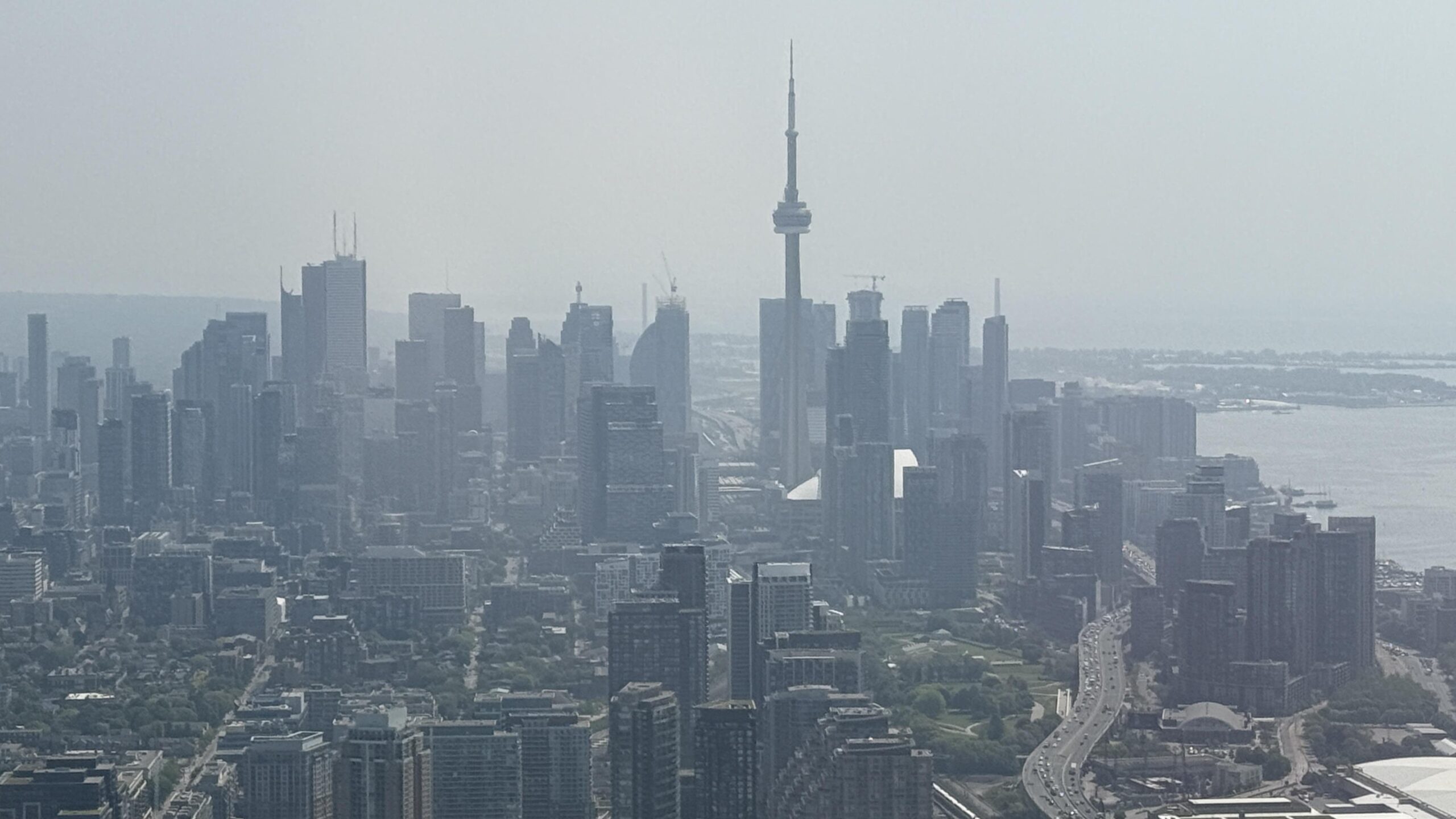
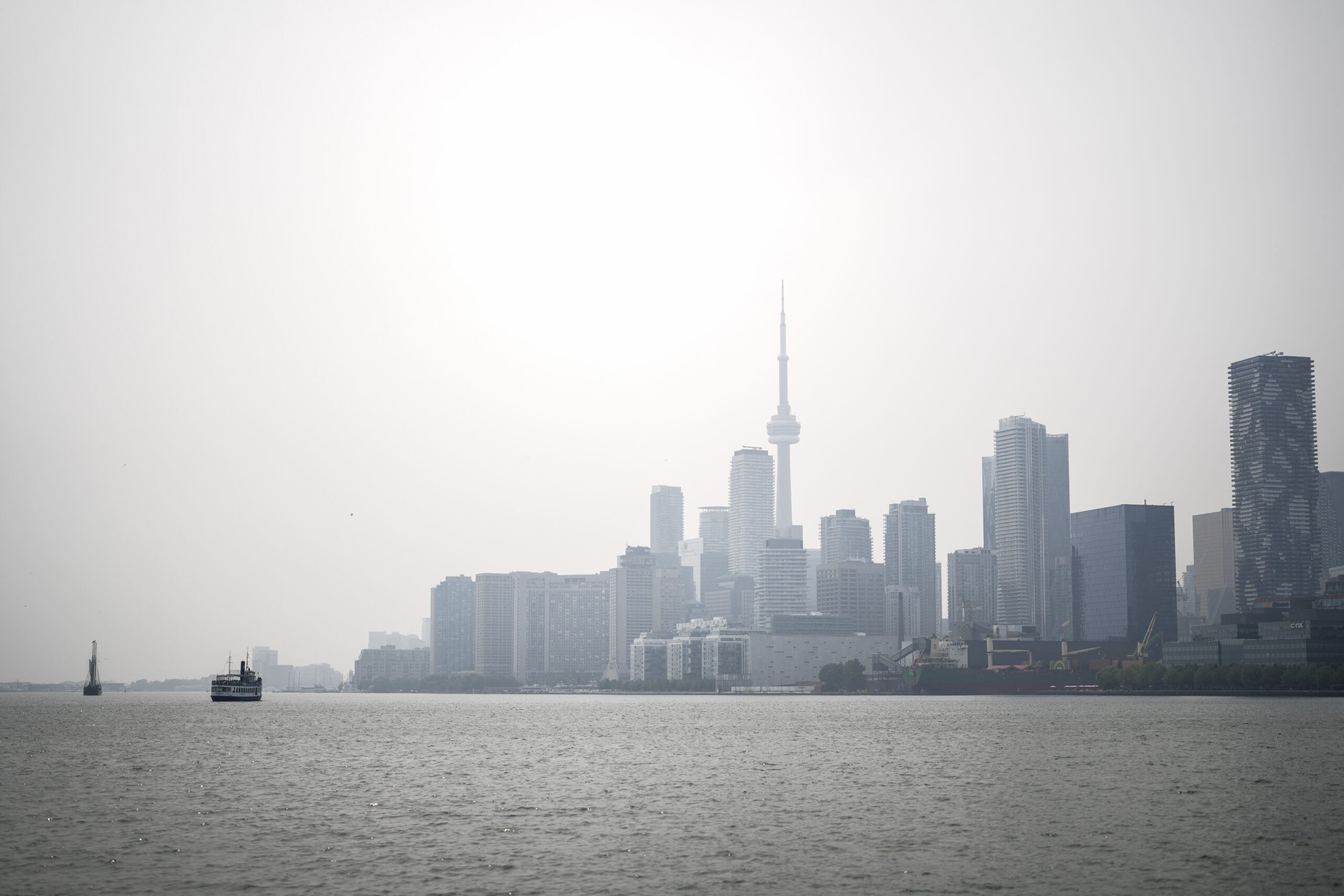
A thick, acrid haze from wildfires Ontario smoke blanketed Toronto’s skyline this morning, reducing the CN Tower to a ghostly silhouette as Environment Canada issued urgent air quality warnings province-wide. At 8 a.m. on July 14, 2025, Toronto ranked as the world’s second-most polluted major city—a grim milestone fueled by over 3,000 wildfires burning across Canada that have already torched 5 million hectares of land this year. This unprecedented environmental crisis merges extreme heat with toxic air pollution, creating dangerous conditions for Ontario’s 15 million residents.
The Science Behind Ontario Wildfire Smoke Invasion
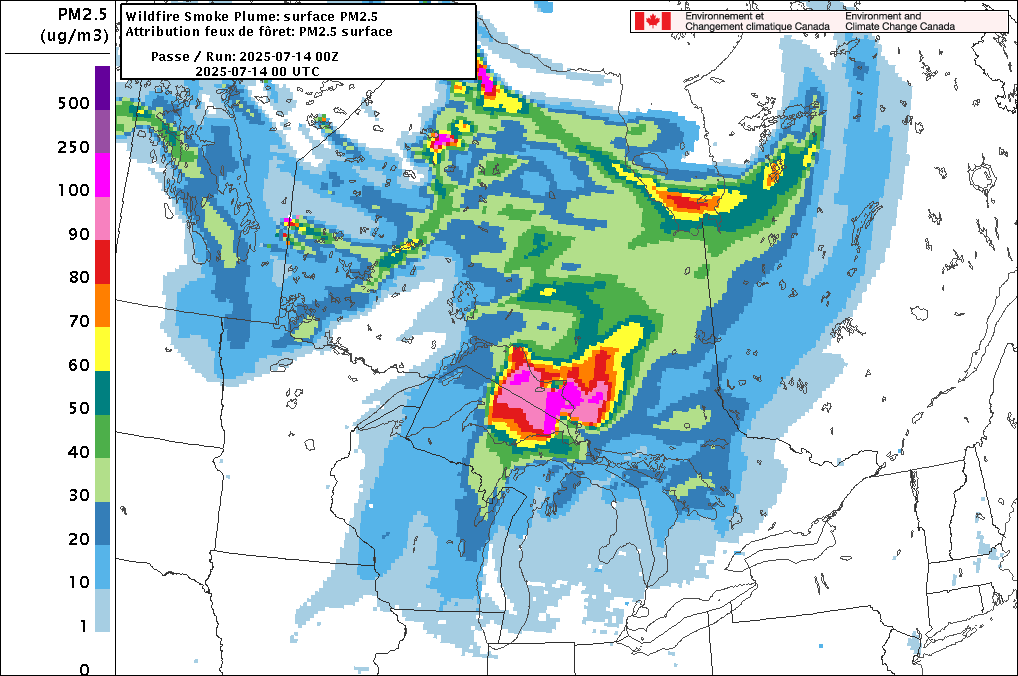
Meteorological forces are funneling toxic air southward from active wildfires in Saskatchewan, Manitoba, and northwestern Ontario. A high-pressure system over Hudson Bay drives westerly winds that transport dense plumes eastward at 25-40 km/h, while nocturnal temperature inversions trap smoke near ground level. This dual mechanism transforms skies into hazardous murk, with PM2.5 concentrations spiking to 182 μg/m³ in Toronto—12 times above WHO’s safe threshold.
Peat fires amplify toxicity across northern Ontario’s vast boreal landscape. Unlike typical forest burns, these smoldering underground blazes release centuries-accumulated pollutants:
- Mercury from historical mining operations
- Arsenic absorbed by sphagnum moss
- Carbon monoxide that binds irreversibly to hemoglobin
A 2024 Health Canada study found peat smoke contains 300% more heavy metals than standard wildfire emissions, creating what researchers call a “triple toxicity threat.”
Health Crisis UnfoldingHealth Crisis: Symptoms and High-Risk Groups
🔴 Critical Vulnerabilities
- Cardiac patients: PM2.5 penetrates bloodstreams, causing inflammation that destabilizes arterial plaque
- Asthmatics: Smoke particles trigger bronchospasms within 15 minutes of exposure
- Pregnant individuals: Toxins cross placental barriers, correlating with 22% higher preterm birth risk
- Outdoor workers: Cumulative exposure mimics smoking 7 cigarettes/hour
Symptom progression requires vigilance:

Environment Canada’s directive remains unambiguous: “Reschedule ALL outdoor activities. Treat sustained exposure as a medical emergency.” Monitor real-time risks using Environment Canada’s Air Quality Health Index.
🛡️ Protection Protocol
Immediate actions:
- Create clean-air sanctuaries: Seal single rooms with weather stripping and run CERTIFIED HEPA purifiers (CADR ≥300)
- Strategic masking: NIOSH N95 respirators block 95% of PM2.5—surgical masks offer <35% protection
- Cooling priority: During extreme heat-smoke events, utilize Toronto’s 500+ air-conditioned public spaces
Heat Wave Amplifies the Danger
Simultaneous heat warnings compound the crisis. Toronto faces a prolonged extreme heat event with highs of 32°C (feeling like 40°C+ with humidity) until Thursday. Overnight “lows” of 23°C offer minimal relief, straining power grids as demand for AC soars. Vulnerable populations face impossible choices: suffocate in sealed homes or risk heatstroke outdoors.
“When heat and smoke collide, cooling trumps air quality. Overheating kills faster than particulate exposure.” — Environment Canada Bulletin
Where the Fires Are Burning
| Region | Active Fires | Key Impact Zones | Evacuations |
|---|---|---|---|
| Northwestern Ontario | 150+ | North Bay, Sault Ste. Marie | Partial |
| Saskatchewan | 120+ | Smoke transport to ON | None |
| Manitoba | 80+ | Flin Flon, Winnipeg | 27,000+ |
Data reflects cumulative fires exceeding 3,000 nationally since January 2025
Northern Ontario communities endure the heaviest burden: North Bay’s air quality remained at “high risk” for 48+ hours, while Sault Ste. Marie reported visibility under 1 km. Firefighters battle blazes in remote, inaccessible terrain, with containment complicated by zombie fires—smoldering peat that reignites after winter.
Long-Range Forecast: Little Relief Ahead
Smoke persistence: Models indicate hazy conditions will linger until Wednesday/Thursday, with wind shifts potentially clearing skies by Friday. Until then:
- Toronto: AQI fluctuates between 5 (moderate risk) and 10 (very high risk)
- Ottawa: Tuesday humidex hits 41°C amid AQI 6
- Sarnia/Southern ON: “Special statements” urge hourly symptom checks
Track smoke movement in real-time via BlueSky Canada’s Smoke Forecast Maps.
Cooling trend arrives late-week: Temperatures dip to 25°C by Friday, with 60% rain chance Thursday—offering hope for smoke dissipation.
A Toxic Legacy Ignited
Canada’s wildfire crisis isn’t just about climate change; it’s a reckoning with industrial history. Northern mining hubs like Yellowknife left landscapes saturated with arsenic. When wildfires burn these regions, they release toxicants absent from natural forests. Studies estimate 840,000 pounds of arsenic alone mobilized near Yellowknife between 1972–2023. This adds a hidden dimension to smoke’s health risks—one still being quantified.
Indigenous Communities on the Frontlines
Over 40% of wildfire evacuations involve Indigenous reserves, where underfunded infrastructure complicates responses. Traditional fire management—like controlled burns to reduce fuel loads—offers solutions, but its implementation remains inconsistent despite growing advocacy.
Visualizing the Crisis:
How to Navigate the Week Ahead
🚨 Immediate Actions
- Monitor AQHI: Use Environment Canada’s real-time Air Quality Health Index.
- Create clean-air rooms: Seal one room with towels; run HEPA purifiers 24/7.
- Hydrate aggressively: Heat+smoke doubles dehydration risk. Avoid caffeine/alcohol.
🌱 Long-Term Solutions
- Advocate for peatland restoration: Rewetting bogs reduces fire intensity.
- Support prescribed burns: Mimic Indigenous practices to prevent megafires.
- Demand air quality infrastructure: Public clean-air shelters and HVAC upgrades in schools.
For detailed health guidance, refer to Health Canada’s Wildfire Smoke Protection Guide.
The Path Forward
Ontario’s dual heat-smoke crisis exposes a fractured climate preparedness system. While cities open cooling centers, long-term strategies—like integrating air filtration into public infrastructure—remain underfunded. For now, the message is survival: seal homes, mask outdoors, and protect the vulnerable. With 5 million hectares already burned nationally, 2025’s fire season isn’t just record-breaking—it’s resetting expectations of summer itself.
“This isn’t ‘bad air’—it’s a public health emergency. We must respond like one.”
— Air Quality Scientist, McMaster University