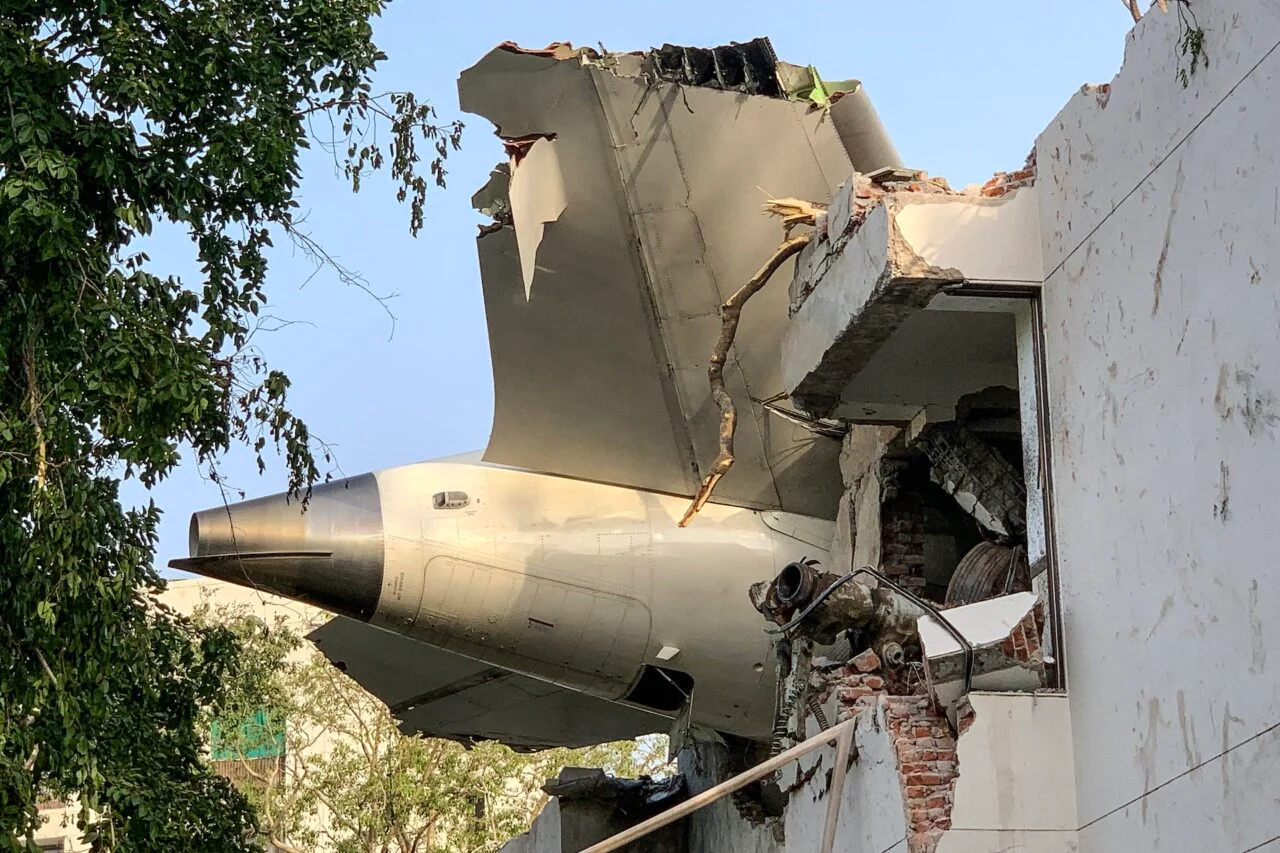
The skies over Ahmedabad turned apocalyptic on June 12, 2025. At 08:08 UTC, Air India Flight AI171—a Boeing 787-8 Dreamliner carrying 242 souls toward London Gatwick—transmitted a final garbled “Mayday” before plunging into a medical college hostel. The crash killed 260 people, including 19 on the ground, marking India’s deadliest aviation disaster in decades and triggering a corporate crisis that threatens the nation’s aviation ambitions.
🔍 Breaking: The AAIB Preliminary Report’s Chilling Findings
Released in the early hours of July 12, India’s Aircraft Accident Investigation Bureau (AAIB) report reveals a sequence of events more alarming than initial speculation:
- Fuel Cutoff Catastrophe:
At 180 knots airspeed, both engines’ fuel control switches flipped from RUN to CUTOFF within one second of each other. This immediately starved the engines of fuel, triggering an uncontrolled descent. Crucially, cockpit recordings capture one pilot demanding, “Why did you cut off?”—to which the other replied, “I didn’t.” - Desperate Recovery Attempt:
Pilots moved the switches back to RUN, triggering an automated relight sequence. While Engine 1 showed partial recovery, Engine 2 failed entirely. The Ram Air Turbine (RAT)—an emergency power propeller—deployed automatically, confirming total power loss. CCTV footage shows the RAT activating seconds after takeoff, a visual testament to the unfolding disaster. - 32 Seconds to Impact:
The aircraft remained airborne for just 32 seconds, crashing 0.9 nautical miles from the runway. All critical systems—flaps, landing gear, thrust settings—were operationally normal. No bird strikes, fuel contamination, or weather anomalies were detected.
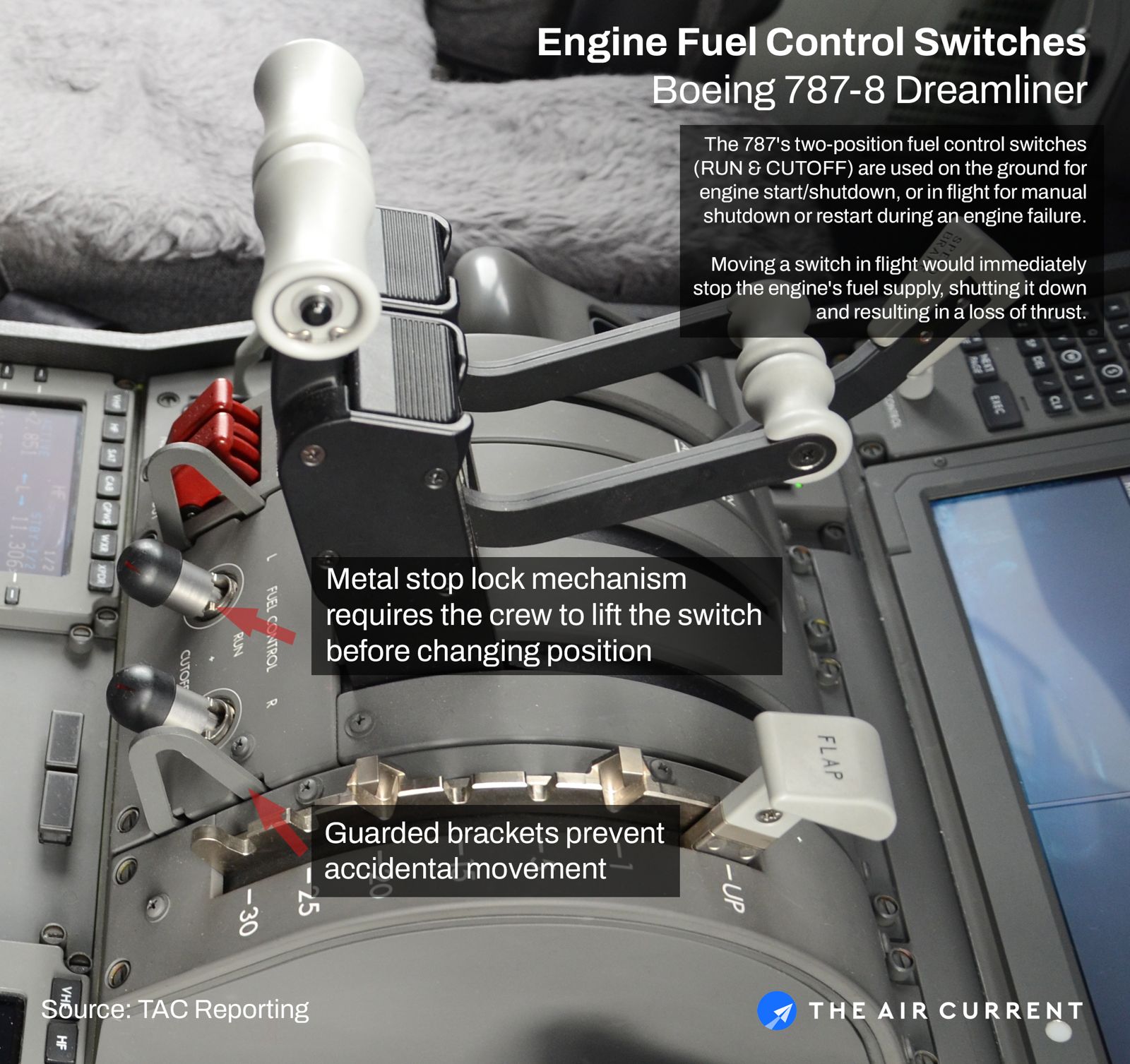
Boeing 787 fuel cutoff switches require deliberate lifting past a metal lock to move—ruling out accidental contact (Source: The Air Current)
🕵️ The Million-Dollar Question: How Did Switches Move?
The AAIB confirms the switches transitioned, but how and why remain unresolved. Key theories under investigation:
- Human Error? Aviation expert John Cox states these switches “can’t be bumped accidentally”—they require intentional lifting past a mechanical lock. Yet both pilots denied activation.
- System Failure? U.S. attorney Mary Schiavo highlights unresolved Thrust Control Malfunction Accommodation (TCMA) issues in 787s. In 2019, an ANA flight suffered uncommanded dives due to TCMA failure. If sensors falsely indicated ground position, engines could auto-throttle back.
- Sabotage? Unlikely per AAIB. Both pilots were highly experienced: the captain had 15,000+ hours, the first officer 3,400+ hours on the 787. No distress signals preceded the flight.
“When both engines fail mid-climb, the cause is almost always external—yet here, all conventional triggers are absent. This points to a systemic or cyber-physical anomaly we’ve not seen before.”
— Mary Schiavo, former U.S. DOT Inspector General
✈️ Air India’s Operational Crisis: Fleet Groundings and Flight Cuts
Even before the AAIB report, Air India implemented sweeping operational changes:
- Widebody Reductions (15%):
Suspended critical routes like Delhi-Nairobi and Amritsar-London Gatwick. North American routes (Delhi-Chicago, San Francisco) slashed by 30-60%. - Narrowbody Cuts (5%):
Axed Bengaluru/Pune-Singapore flights and reduced frequency on 19 domestic routes including Delhi-Mumbai (176→165 weekly flights). - Enhanced Safety Checks:
Mandatory pre-flight inspections for all 787s, extending turnaround times by 90+ minutes. Tata Group sources confirm these are “indefinite.”
Table: Air India’s July 2025 Route Suspensions:
| Route | Frequency Cut | Aircraft |
|---|---|---|
| Delhi-San Francisco | 10→7 weekly | Boeing 777 |
| Mumbai-Bagdogra | Suspended | Airbus A320 |
| Goa (Mopa)-London Gatwick | Suspended | Boeing 787 |
| Delhi-Chicago | 7→3 weekly | Boeing 777 |
🌐 Systemic Failures: India’s Aviation Safety Under Microscope
The crash exposed structural vulnerabilities in India’s booming aviation sector:
- Regulatory Gaps:
India lacks an independent safety authority like the UK’s CAA. The Directorate General of Civil Aviation (DGCA) faces criticism for reactive oversight—fining Air India for overdue slide checks after the crash. - Infrastructure Strain:
With 6,900 daily flights carrying 1M+ passengers, airports like Ahmedabad lack critical safeguards: no EMAS arrestor beds or extended runway safety areas. - “Normalized Deviance”:
Captain Amit Singh (Safety Matters Foundation) notes systemic complacency: “This crash resulted from a chain of overlooked warnings. Air India Express was recently caught falsifying maintenance records.”
⚠️ The Boeing Factor: Dreamliner’s First Fatal Crash
As Boeing’s flagship widebody, the 787’s impeccable safety record made the crash inexplicable:
- No Airworthiness Directives: The AAIB confirms no urgent actions for Boeing or GE Aerospace. Engine inspections found no anomalies.
- Contradictory Data: Thrust levers were at idle, but black boxes recorded takeoff thrust—suggesting a control system disconnect.
- Global Ripple Effect: Airlines worldwide quietly review 787 switch protocols. United Airlines rerouted 787s from turbulent regions after a 2025 uncommanded dive incident.
✊ The Human Toll: Survivors, Blame, and Tata’s Reputation Battle
Beyond technical analysis lies profound human tragedy:
- The Sole Survivor: British national Vishwas Kumar Prakash (Seat 11A) miraculously escaped. His testimony describes “bodies scattered in smoke.”
- Political Fallout: The crash killed former Gujarat CM Vijay Rupani, ensuring relentless media scrutiny.
- Tata’s Crisis: Having acquired Air India in 2022, Tata confronts inherited systemic flaws. As Captain Singh notes: “They adopted outdated procedures and a bureaucratic safety culture.”
🔮 What’s Next: Investigation Timeline and Industry Impact
- Phase 2 Probes: The AAIB will deep-dive:
- Switch mechanism forensic analysis
- Flight control computer code review
- Crew training/medical history.
- Legal Storm: U.S. firms like Motley Rice prepare lawsuits citing Boeing’s “known TCMA risks.”
- Market Shift: Emirates and British Airways gain share on India-Europe routes as Air India’s brand bleeds.
“Accidents are rarely isolated. They’re the product of a chain—overlooked warnings, normalized deviance, and complacency. This must end.”
— Capt. Amit Singh, Safety Matters Foundation
✅ Safety Recommendations: A Path Forward
While final reports take 12+ months, experts demand immediate changes:
- Physical Switch Guards: Install secondary latches on fuel cutoff levers.
- Cockpit Voice Analytics: AI-based stress detection in voice recorders.
- Runway Safety Zones: EMAS foam beds at all Indian airports by 2027.
- DGCA Reform: Create an independent accident investigation arm.
🛫 The Bottom Line: The AI171 crash embodies a catastrophic convergence—human, mechanical, and systemic. For Air India, survival hinges on transparency. For global aviation, it’s a wake-up call: even “foolproof” technology isn’t immune to tragedy. As the AAIB continues its investigation, one truth echoes: in aviation, complacency is the deadliest malfunction.